
Ultimate Guide to Matcha: History, Grades, Utensils, and How to Make the Perfect Matcha Latte
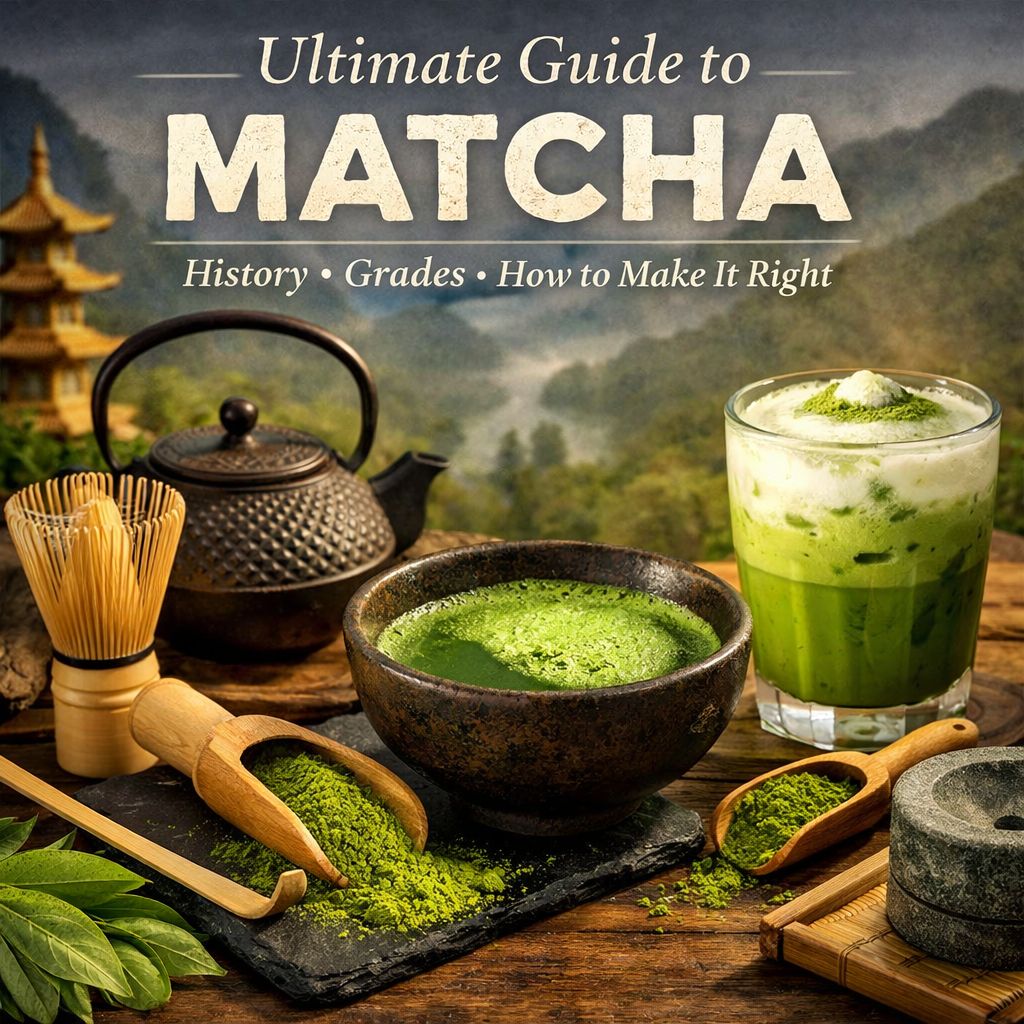
Matcha has become a global staple, but much of what we see online only scratches the surface. This ultimate guide to matcha focuses on accuracy, tradition, and correct technique—without romanticizing or oversimplifying the tea.
I wrote this guide after traveling to Uji, widely considered the matcha capital of Japan. There, I studied matcha at its source, participated in a hands-on class, and learned directly how Japanese producers evaluate quality, prepare matcha correctly, and define what “good matcha” actually means.
In this guide, you’ll learn where matcha comes from, how it fits into Japanese tea culture, how to understand matcha grades as they are used in Japan, and how to prepare both traditional matcha and a properly balanced matcha latte using precise measurements in grams and milliliters.
Why I Traveled to Uji, Japan to Learn Matcha
Before creating this ultimate guide to matcha, I realized that much of the information available online relied on marketing language rather than lived experience. To understand matcha properly, I traveled to Uji—a town with over 800 years of tea history and still one of the most important centers for matcha production in Japan.
In Uji, matcha is treated as a craft, not a trend. Quality is discussed in terms of cultivars, harvest timing, and preparation method—not labels. Being there helped clarify why many commonly used terms outside Japan don’t accurately reflect how matcha is evaluated.
A Hands-On Matcha Class in Uji
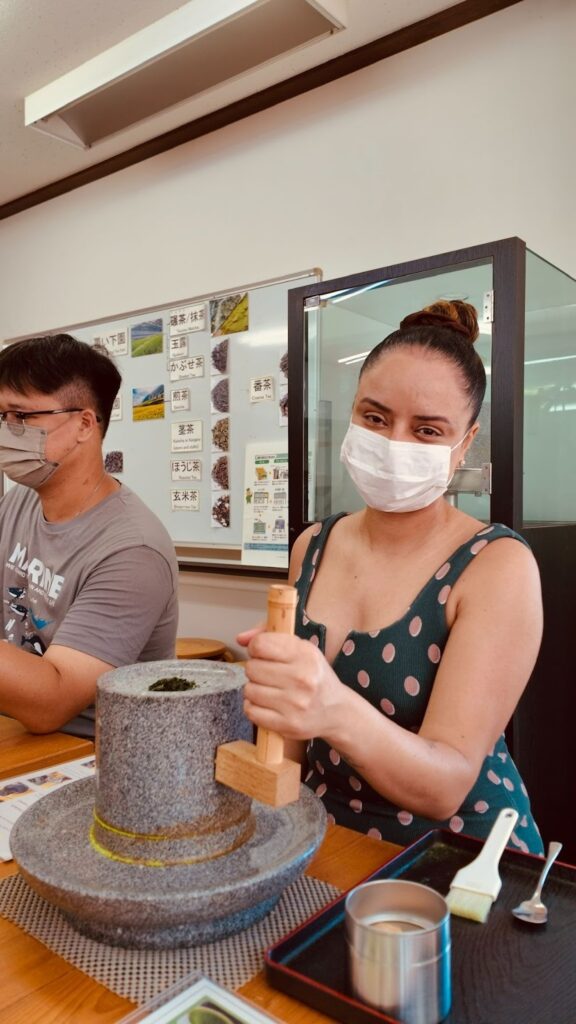
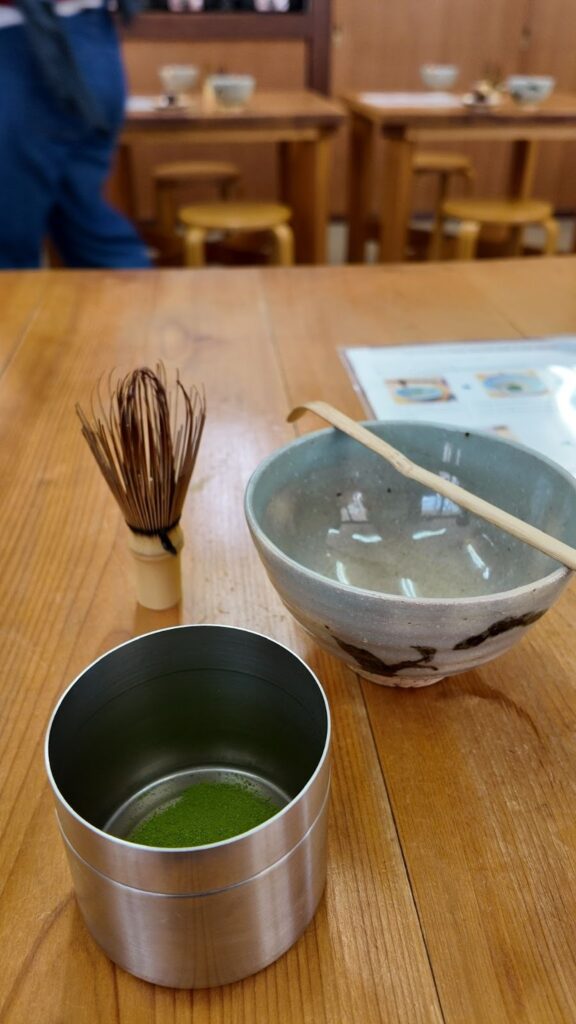
One of the most important parts of my trip was a hands-on matcha class. We began by grinding dried tencha leaves ourselves on a traditional marble stone mill. This process was slow and physically demanding, producing only a small amount of matcha at a time. It immediately explained why high-quality matcha is expensive and why speed or shortcuts reduce quality.
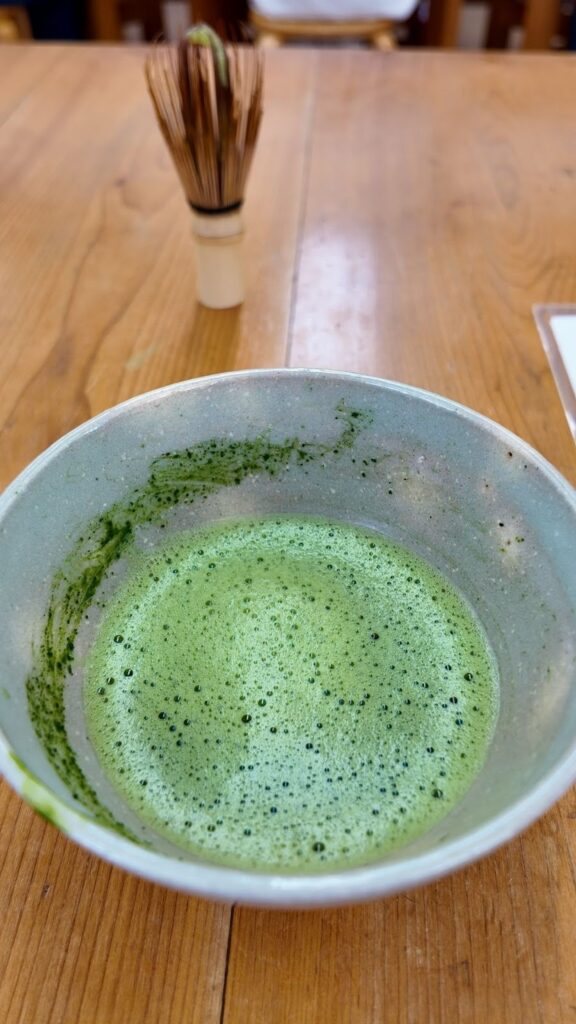
After grinding the leaves, we learned how to properly whisk matcha using a chasen, how to judge texture and foam, and how flavor changes depending on technique. We tasted matcha prepared correctly and compared it to improperly whisked matcha, which made the differences very clear.
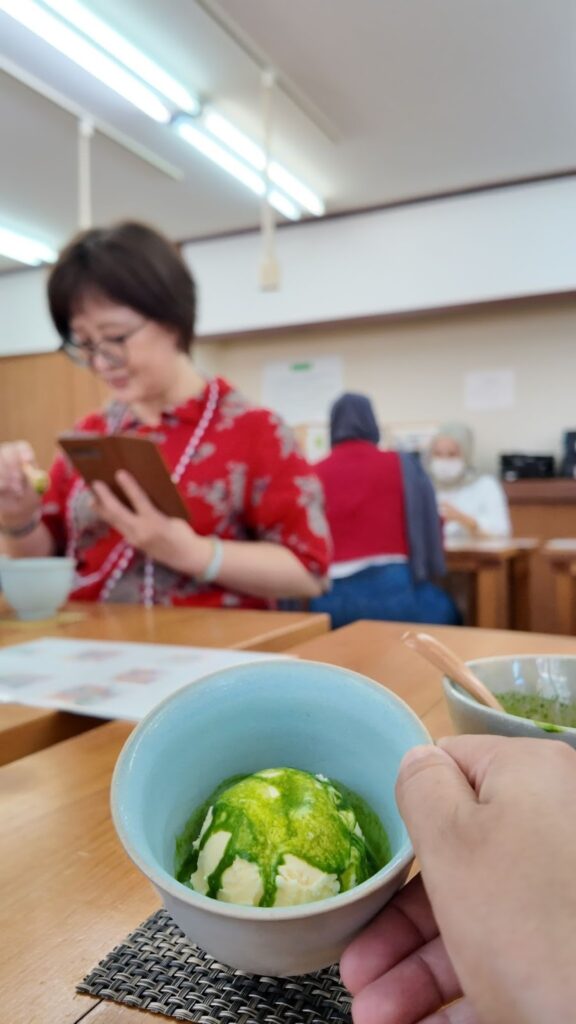
The class ended with matcha served alongside ice cream, showing how good matcha maintains its flavor even when paired with dairy and sweetness. I also made a Japanese friend during the class, which made the experience feel grounded in everyday tea culture rather than something staged for visitors.
Everything in this guide—especially the sections on matcha grades and preparation—is informed by what I learned in Uji.
The Historical Foundation of Matcha in Japan
Tea was introduced to Japan from China by the Zen monk Eisai, who promoted tea as a support for health and meditation. Around 800 years ago, tea cultivation began in Uji, a region with ideal conditions for growing high-quality tea due to its misty climate, fertile soil, and moderate temperatures.
During the Muromachi period, Ashikaga Yoshimitsu formalized Uji tea as a high-status product. From that point forward, tea production became closely tied to political power and cultural practice.
Ocha no Kanbayashi and Official Tea Masters
The Kanbayashi family served as Chatō-dori, officials overseeing tea production and distribution. Established near Uji Bridge more than 420 years ago, they supplied tea to leaders such as Toyotomi Hideyoshi and continued their role after Tokugawa Ieyasu moved the capital to Edo.
They managed the Ocha-tsubo Dōchū (Tea Jar Procession), supplying tea exclusively to the shogunate. This long lineage explains why Uji matcha is still considered a reference point for quality today.
Japanese Green Tea Types Explained (Using a Wine Analogy)
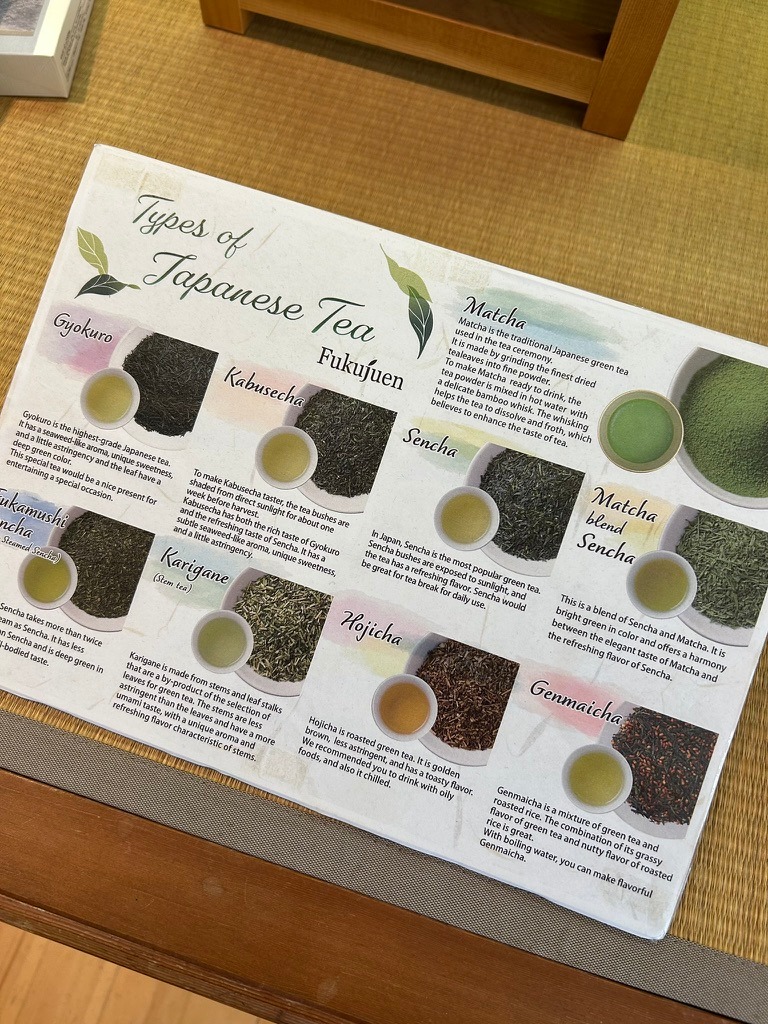
Understanding Japanese green tea is similar to understanding wine. All wine comes from grapes, but grape variety, terroir, harvest timing, and processing create completely different results. Japanese green tea works the same way: the plant is the same (Camellia sinensis), but how it is grown and processed defines the final tea.
Gyokuro
Gyokuro is the highest-grade leaf tea. Tea bushes are shaded for about three weeks before harvest, increasing amino acids and reducing bitterness. The flavor is dense, sweet, and strongly umami.
Best for: Slow drinking and experienced tea drinkers.
Kabusecha
Kabusecha is shaded for about one week. It sits between Gyokuro and Sencha, combining richness with freshness.
Best for: Drinkers who want complexity without intensity.
Sencha
Sencha is grown in full sunlight, producing a brighter, more refreshing tea with mild astringency. It is the most common green tea in Japan.
Best for: Daily use and meals.
Matcha
Matcha is made from shade-grown tencha that is stone-milled into powder. You consume the entire leaf, intensifying both flavor and nutrients.
Best for: Focus, ritual, and culinary use.
Fukamushi Sencha
Deep-steamed sencha with lower astringency and a thicker mouthfeel.
Best for: Those who prefer softer bitterness.
Karigane
Made from stems rather than leaves, resulting in a lighter, sweeter flavor.
Best for: Easy drinking, especially later in the day.
Hojicha
Roasted green tea with low caffeine and a nutty flavor.
Best for: After meals or evenings.
Genmaicha
Green tea blended with roasted rice, creating warmth and balance.
Best for: Comfort drinking and food pairing.
Matcha Grades Explained in Detail (Based on Japanese Practice)
Outside Japan, matcha is often divided into “ceremonial” and “culinary” grades. According to Japanese tea producers and instructors, these are marketing terms—not official standards.
In Japan, matcha quality is evaluated based on:
- Tea cultivar
- Shading method and duration
- Harvest season (first harvest is essential)
- Leaf selection (young leaves only)
- Stone-milling speed and temperature
- Intended preparation method
During my time studying matcha in Uji, instructors consistently emphasized that quality is defined by how the matcha is meant to be prepared, particularly whether it is suitable for koicha.
Why “Ceremonial Grade” Is Inaccurate
The term “ceremonial grade” is commonly used outside Japan to suggest high quality. In Japan, matcha is instead categorized by whether it is intended for usucha or koicha.
Usucha (Thin Tea)
- Matcha: 2 g
- Water: 60 ml
- Preparation: Whisked to create foam
- Flavor: Balanced umami with light bitterness
Usucha is the most common way matcha is consumed, both casually and in many tea gatherings.
Koicha (Thick Tea)
- Matcha: 4 g
- Water: 30 ml
- Preparation: Slowly kneaded, not whisked
- Texture: Thick, glossy, no foam
- Flavor: Deep umami, no bitterness
Only the highest-quality matcha can be used for koicha. If bitterness appears, the matcha is considered unsuitable. You can watch this video from Tezumi for a more in-depth explanation.
Key point: If a matcha cannot be used for koicha, it is not considered top-grade in Japan, regardless of marketing language.
Traditional Utensils for Matcha Preparation
- Chawan: Wide bowl for proper whisking
- Chasen: Bamboo whisk designed for aeration
- Chashaku: Bamboo scoop for measuring
- Sieve: Removes clumps for smooth texture
In Uji, we were taught that even excellent matcha will taste unpleasant if whisked incorrectly or clumped.
How to Prepare Traditional Matcha (Usucha)
Ingredients
- Matcha: 2 g
- Water: 60 ml at 80–90°C
Method
- Sift the matcha into a bowl.
- Add the water.
- Whisk rapidly in a “W” motion.
- Aim for fine, even foam.
- Drink immediately.
How to Make the Perfect Matcha Latte
A good matcha latte starts with properly prepared matcha. One of the strongest lessons from my class in Uji was that shortcuts at this stage always affect flavor.
Step 1: Prepare the Matcha Base
- Matcha: 2 g
- Water: 40 ml at 80°C
Sift the matcha, add water, and whisk until smooth, glossy, and completely free of clumps.
Step 2: Prepare the Milk
- Milk of choice: 160 ml
- Heat to 60–65°C
- Lightly froth to create microfoam
Step 3: Combine
Slowly pour the warm milk into the matcha. Stir gently. If sweetening, keep it minimal and dissolve fully before adding.
This ratio keeps the matcha flavor present while adding creaminess.
Final Thoughts: Matcha as a Learned Practice, Not a Trend
Matcha rewards attention and correct technique. Learning directly in Uji showed me that quality isn’t defined by labels, but by cultivation, preparation, and intention. Whether you drink usucha daily or enjoy matcha lattes occasionally, understanding these fundamentals makes a noticeable difference.If this ultimate guide to matcha helped clarify the tea beyond marketing terms, save it as a reference and explore more intentional living at desertwildflower.life 🌿
And if you’re looking for recommendations on where to stay in Tokyo, I suggest reading this blog post, where I share my experience staying in Sugamo on my last trip, along with other areas I recommend.